


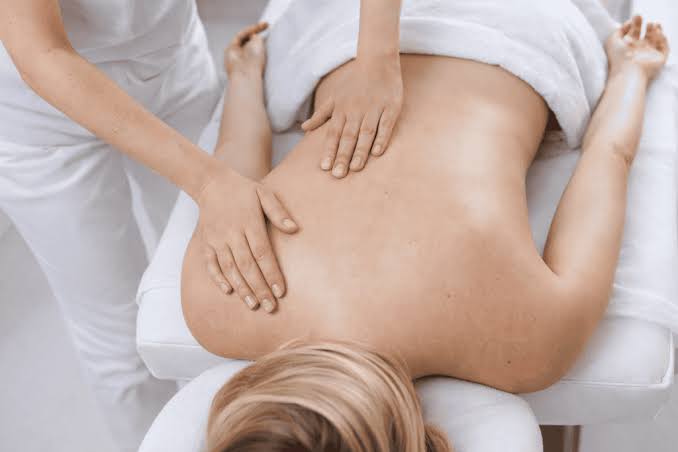
You do not need a diagnosis-shaped explanation to ask for a personal-care massage. Describing the experience you want is often a clearer starting point: a quiet session, a particular comfort preference or time away from everyday demands. Keep medical concerns separate and take them to an appropriate healthcare professional. A precise description of what feels workable is more useful than borrowing a clinical term to make an ordinary preference sound important.
People sometimes struggle because they think the provider expects expert language. They search for the right muscle name, repeat a phrase from a video or ask for a treatment they do not really understand. That can obscure the simplest useful information. You are allowed to begin with your own words and ask the provider to explain theirs.
Say what a comfortable session would look like
Think about the experience rather than promising yourself a particular outcome. Do you want explanations as the appointment progresses, or only necessary check-ins? Are scents welcome? Would you prefer a simpler service over one with several added elements? These questions describe preferences the provider can discuss without requiring you to claim that the appointment will solve a health problem.
Use direct, changeable language. “I would prefer lighter pressure” is easier to act on than “I need something really therapeutic,” which can mean different things to different people. If you are unsure what a service label means, ask for a plain description. The goal is not to prove that you already understand the menu; it is to establish what the proposed appointment involves.
Be specific about what you do not want as well. You can ask to avoid a particular area, decline an optional element or request a different communication style. You do not have to construct a long justification for a preference. The provider can explain what can be accommodated and any implications for the service you are considering.
A written sentence can help if you tend to forget your priorities once a conversation starts. For example: “I am booking for personal care, prefer a quieter session and would like to discuss adjustments before we begin.” That is a hypothetical brief, not a universal formula. Change it to reflect what actually matters to you rather than copying somebody else’s expectations.
Keep the medical question in its own lane
A concern about pain, an injury or another health issue needs an appropriate assessment; it should not be disguised as a request for a stronger spa service. Tell the provider relevant information honestly and ask about the limits of their role. If the issue requires a healthcare professional, resolve that question rather than treating a cosmetic or relaxation booking as a substitute.
Likewise, do not assume that a service name establishes a practitioner’s professional credentials or eligibility for reimbursement. If credentials or coverage matter to your decision, verify the actual practitioner and the applicable terms with the relevant professional or benefits provider. This article does not identify any spa service as insured healthcare.
You can hold two questions at once without blending them. One might be whether a personal-care appointment would fit your preferences. The other might be whether a medical condition affects what is appropriate. The answers may come from different people. It is better to acknowledge that separation than to ask reception for a clinical conclusion they cannot responsibly provide.
Ask how adjustments are communicated
Before the appointment, establish how you can request a pause or a change. You should not have to choose between preserving a peaceful atmosphere and making a concern known. Ask what the provider normally checks during the session and how to indicate that something needs attention. This conversation is especially useful if you are unfamiliar with the format.
When considering the holistic massage service in Thornhill at Santé Healing Spa, confirm the current appointment options and explain your preferences directly. The service page is a starting point for those questions, not a personalized assessment or a guarantee about how the visit will feel. Ask who will provide the service and what arrangements are available for the particular booking.
Do not treat your opening preference as a commitment you must honour throughout the appointment. You may discover that you want more explanation, less pressure or a different position. Say what has changed. Accurate feedback in the moment is more useful than waiting until the end because you worry that changing your mind will seem inconsistent.
If words become difficult when you are uncomfortable, discuss a simple way to request a pause beforehand. Let the provider explain how they handle that. The aim is not to invent a complex signalling system; it is to remove uncertainty about whether and how you can interrupt the service when necessary.
A friend’s positive account can help you think of questions, but it does not replace your own communication. The same format may feel different to another person, and a preference that made their visit enjoyable may be irrelevant to yours. Use the recommendation as an introduction, not as a script you are expected to follow.
Notice which words helped the provider
Afterward, remember the language that proved useful. Perhaps saying “please explain before changing the next step” worked better than asking for a relaxing experience in general. Perhaps you learned that a particular optional element was not something you wanted. Those observations can inform a later booking without turning one appointment into a prediction about every future visit.
Keep the review grounded in the experience. Was it easy to raise a concern? Did you understand the service you agreed to? Were your preferences discussed clearly? You need not rate the appointment by intensity or by whether it lived up to a dramatic wellness promise.
One useful phrase carried into the next conversation is a better outcome than a collection of impressive terms you cannot explain. You are describing your own experience, and ordinary language is enough to begin.



Recent Comments